
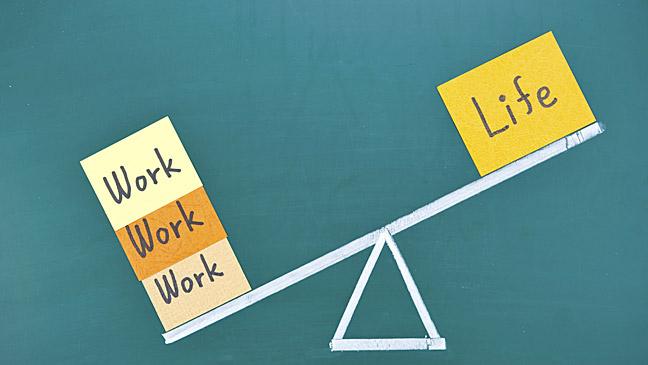
During the recent years, we all think about how we can do many works in limited times, how we can fix the work-life balance, how we can adopt strategies that increase the performance and speed, etc. These are essential topics in coaching sessions too.
The first question to ask is when and why we started thinking about efficiency? This may be explained by living in a technology era or extended working hours that decreases the time that we spend with our family and friends or for our hobbies. The desire of working much harder because of increased competition, the fear of missing out because of rapid changes, making efforts to earn more money or to promote, with the technology especially smartphones, the increase in stimulus can be counted as reasons of broken life-work balance.
A better work-life balance begins with precise goals. If you have plans and goals that are not started or uncompleted, this may be as a result of a lack of motivation or desire. These assignments may be hard to complete, unrealistic, too general, or maybe they are not your realistically desired goals but instructions or expectations of the social environment around you. Starting with your determined tasks may increase your desire and faith. Desire and faith provide a fast progression and give you energy and self-confidence to complete new goals.
If you have mandatory and undesired duties, you can find causes that give you pleasure throughout the journey; you can focus on the reasons that will take you to the finish line and set a reward for the completion may facilitate the progress. In Outliers book Malcolm Gladwell states that if you work on an activity for 10.000 hours, you become master on it. So, if you have tasks that you continue doing for a while and you repeat it, you can focus on the idea that you will become a master. However, if you want to become a master, you have to do the task accurately. It is impossible to be a master after working 10.000 hours wrong.
After specifying the desired goals, you need to preserve the focus and increase the efficiency. The first step is to plan the most efficient times of a day and a week according to your biological clock. You may prefer mornings or evenings.
The writer of Getting Things Done, David Allen, states that our brains are not storages to keep our to-do list. Contrarily, storing in mind decreases the capacity of thinking and weakens decision making and idea production functions. So, you have to write your goals and your to-do list.
Another problem affecting work-life balance is concentration and focus. It is the most critical component of completing tasks faster and efficiently. Day by day, our focusing time shortens because of increased stimulus. While we are working, we find ourselves surfing one site to another and focused to an irrelevant topic, or we are stimulated by emails or instant messages that disrupt the task and makes it difficult to concentrate again.
One of the efficient techniques to fix the focus is Pomodoro technique, meaning tomato in Italian. The method is inspired by tomato-shaped kitchen timers. It suggests that with short working sessions and small breaks people can work efficiently. For example; working 25 minutes and 5 minutes of recess and then 25 minutes of work again. You can keep the time on your phone or with timers, but there is an application that you can use called Tide that is also giving forest or rain sounds to enable your focus.
The purpose of our lives is happiness. Even if we cannot ensure the ideal work-life balance all the time, to have joy, it is worth trying to have it as far as possible.